
The Parents’ Long Search
The Painted BirdThis thread follows The boy’s parents from a desperate wartime separation through years of uncertainty and a postwar effort to locate and reclaim their child.
increasing Bearing strength in each event
 decreasing
Bearing strength in each eventdecreasingA Dangerous Decision
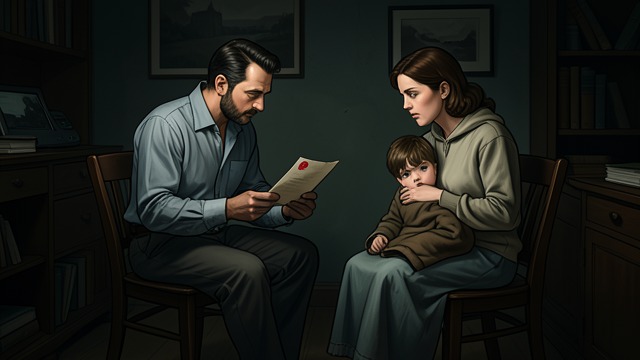
Sending Their Son Away
Seeking Safety
As war begins, The boy’s parents entrust their young son to a man paid to find temporary foster parents in a distant village. The father’s prewar anti-Nazi activities put the family in danger of forced labor or imprisonment, and the parents believe the child may have a better chance of surviving apart from them.
A Risk They Cannot Control
The decision is made under pressure, not from indifference. The parents expect to reunite with their son, but occupation and population transfers disrupt communication. Once contact with the man who placed him is lost, their protective plan becomes the source of a separation they cannot readily reverse.
Hiding Through the War
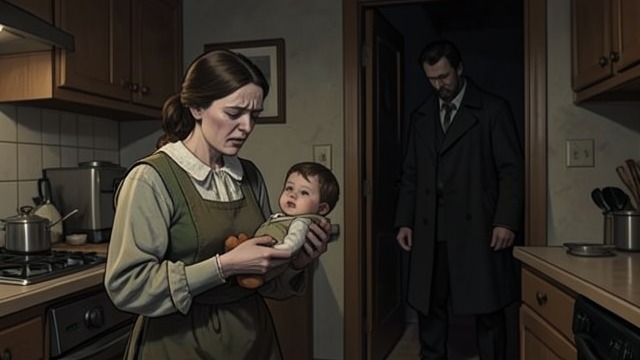
Survival Apart
A Family in Hiding
The boy’s parents spend the war years in constant danger, repeatedly seeking new hiding places and relying on secrecy. Their lives become defined by fear, hunger, flight, and dependence on strangers, while the fate of their son remains beyond their control.
The Burden of Uncertainty
The mother later tells The boy that his parents repeatedly feared their decision to send him away had been wrong. Their anxiety is intensified by seeing other children taken toward the camps and by knowing that they cannot protect their own child directly. Their survival therefore carries an unresolved question about the child they entrusted to another person.
Searching After Liberation
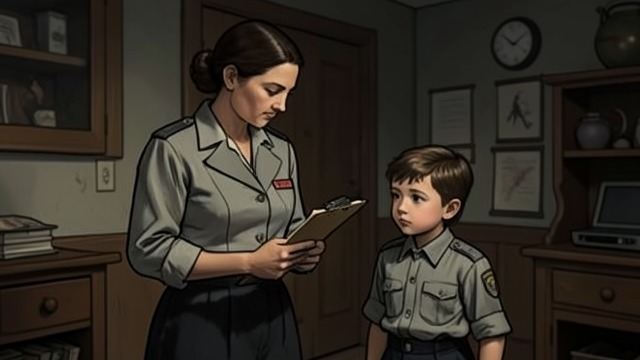
A Search Reopened
Following a Lead
After surviving the war, The boy’s parents continue trying to discover what happened to their son. Information that a child matching his description may be at a local center gives them a concrete lead after years in which contact and reliable news were unavailable.
Recognition Made Difficult
The search does not immediately restore their family. The boy has been shaped by years of danger and has learned to hide his history, even from people who might be his parents. The parents must reach him through official procedures and personal details, while he must decide whether to acknowledge them.
The Birthmark Revealed
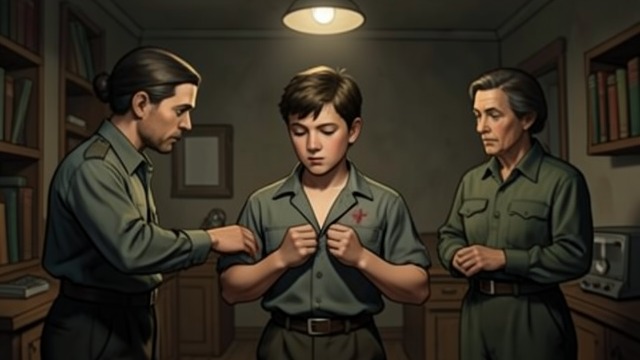
A Family Recognized
Testing Identity
At the Children’s home, the parents meet The boy with help from a social commission. His father asks him to unbutton his uniform and show the birthmark on his chest, a detail that can establish who he is. The boy hesitates, understanding that confirmation will end the uncertainty and change the direction of his life.
Reunion Without Ease
He finally reveals the mark, and his parents embrace and kiss him. Their relief is visible, but the boy remains wary: he has imagined a future with the Red Army and fears the restrictions that may come with being someone’s child again. Recognition resolves the question of identity without resolving the emotional distance created by years apart.
An Uneasy Household
Return to Family Life
A Crowded Home
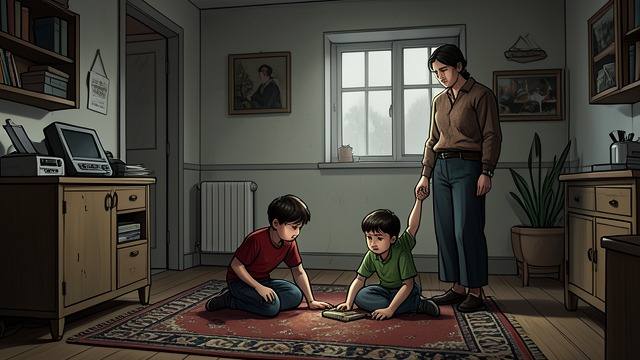
The parents take The boy to their small apartment, where he discovers that they have adopted a younger child during the war. They explain the child’s history and show him the affection that has developed in the household. The boy, however, feels that he may have belonged more fully to the uncertain life he left behind.
Love and Damage
The crowded, fragile household must absorb a child accustomed to defending himself through force. When The boy breaks his adoptive younger brother’s arm, his parents look at him silently, confronted with the damage that separation and violence have left. The family is reunited, but neither affection nor shelter can instantly restore the lost years.
Autumn 1939
During the German occupation
After the German occupation ends
The closing months of the war
The first months after the reunion
